U.S. National Science Foundation (NSF) Priority Area Panel: Using Informal Science Opportunities to Develop the Next Generation of Innovators in Biotech, Quantum Information Science, and AI
Speakers: Diana Franklin, Pengyu Hong, Jose Agosto Rivera
This panel explored how informal science education can spark interest and build foundational skills in quantum information science, artificial intelligence, and biotechnology, three priority areas for the U.S. National Science Foundation. Panelists highlight research-driven informal learning models that cultivate curiosity, computational thinking, and problem-solving skills that support future innovation.
Diana Franklin from Quander 2.0: Fostering a QIS Learning Ecosystem for Middle Schoolers through Informal Educator Professional Development, an Online Game, and Offline Play
Pengyu Hong from Collaborative Research: Cultivating Tomorrow’s Innovators Through Exploring Planetary Images with Artificial Intelligence
Jose Agosto Rivera from Collaborative Research: Arecibo C3 – Center for Culturally Relevant and Inclusive Science Education, Computational Skills, and Community Engagement
Session Materials
Session slides – Diana Franklin – Where’s the Linear Algebra? Teaching Quantum Computing to children
Speaker Bios
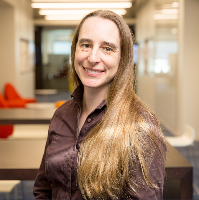
Diana Franklin
Dr. Franklin is a Professor of Computer Science at the University of Chicago. When she received her Ph.D. at UC Davis, 2002, her research focus was computer architecture, especially new technologies. Since then she has done research on intelligent memories, memristors (or “memory resisters”), and quantum computers. In 2008, she began her transition to computer science education research. She now leads the CANON (Computing for ANyONe) Lab, specializing in both 3rd-8th grade computer science interventions and quantum computing education for novices of any age. She was a founding co-lead of the Q-12 Partnership, a new initiative by the Office of Science and Technology Programs, the National Science Foundation, industry, and professional organizations to bootstrap K-12 quantum information science education.
Email: dmfranklin@uchicago.edu
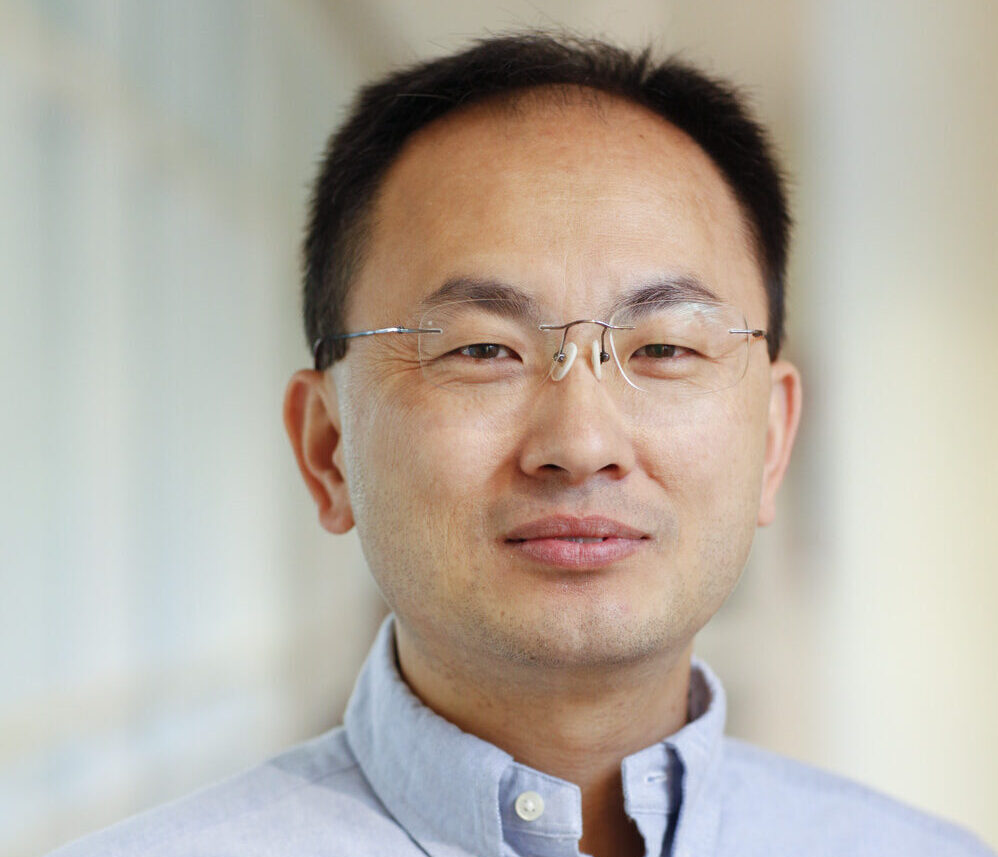
Pengyu Hong
Dr. Pengyu Hong is professor of Computer Science at Brandeis University. Dr. Hong’s research focuses on artificial intelligence (specifically machine learning) and its various applications, in Bioinformatics, Medical Informatics, FinTech and Intelligence Education to name a few. He served as a reviewer of peer reviewed journals in the area of cell biology, bioinformatics and computational biology, pattern recognition, computer vision, image processing, and statistics in medicine. Please help me give Dr. Hong a warm welcome as he joins us on the virtual stage.
Email: hongpeng@brandeis.edu
Jose Agosto Rivera
Dr. Jose Agosto-Rivera is a tenure track professor and researcher at the University of Puerto Rico where he conducts research at the intersection of circadian biology, neurobiology, and animal behavior. Prior to becoming a professor, Dr. Agosto-Rivera completed a PhD in neuroscience at Brandeis University, where he contributed to groundbreaking research on the nature of circadian oscillators, and a postdoc at the UPR-Medical Science Campus where he studied hormones and behavior. Across his career, Dr. Agosto-Rivera has published extensively in peer-reviewed journals on topics such circadian rhythm development, and neuroecology, and has been a recipient of numerous grant awards from NSF, NIH, and USDA to name a few.
Email: jose.agosto1@upr.edu