- What is AI Literacy?
- Webinars
- AISL Project Spotlight
- AISL Project Resources
- Additional Resources
What is AI Literacy?
AI literacy is a set of foundational skills and competencies that enable individuals to understand how AI works, responsibly evaluate AI systems, and use AI effectively as a human-centered tool across various contexts, including learning, work, and civic applications, while adapting to its ongoing evolution1.
Webinars
Playful Pathways to AI Literacy in Informal STEM (Part 1)
This webinar was presented on Tuesday, Dec. 2, 2025
How can we build effective AI literacy programs in informal learning spaces?
This webinar was the first session in the two-part Playful Pathways to AI Literacy in Informal STEM series. This collaboration between the REVISE Center and the New York Hall of Science—facilitated by Antony Negron (NYSCI) and Pati Ruiz (REVISE)—featured four leaders in the field:
- Dorothy Bennett, Director of Creative Pedagogy, New York Hall of Science
- Azadeh (Azi) Jamalian, Founder, CEO, The GIANT Room
- Jessica Santana, Chief Executive Officer, America On Tech, Inc.
- Katrina Stevens, President and CEO, The Tech Interactive
Our panelists discussed their work and potential future directions for informal AI literacy program development and research. Participants had the opportunity to explore the current landscape, identify new ideas for collaborations and partnerships, and discover concrete strategies to establish and expand AI literacy programs in their local contexts.
Playful Pathways to AI Literacy in Informal STEM (Part 2)
This webinar was presented on Tuesday, Dec. 17, 2025
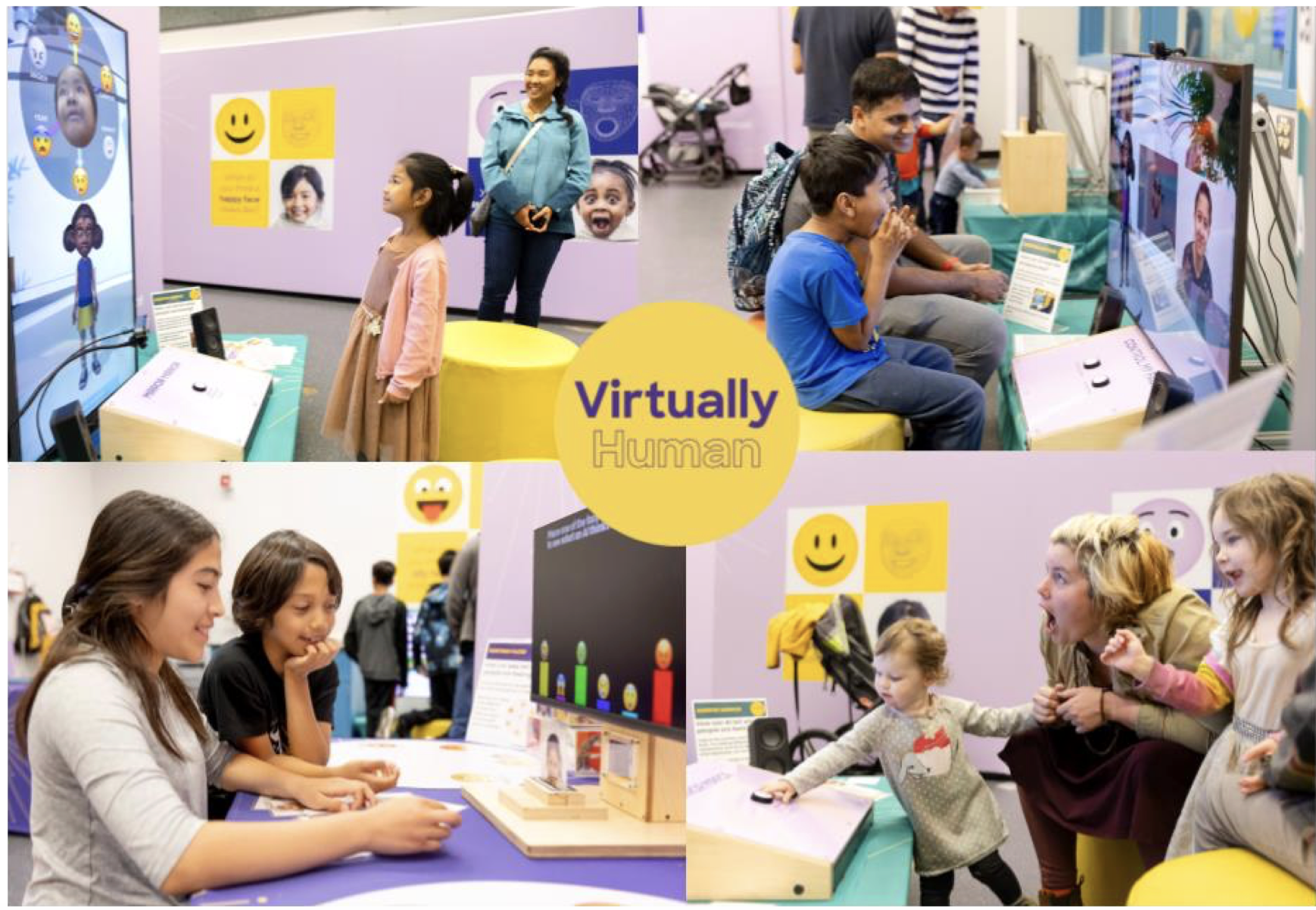
This webinar was part 2 of our 2-part series, Playful Pathways to AI Literacy in Informal STEM and explored how informal STEM education (ISE) researchers, practitioners and community members are bringing artificial intelligence (AI) to life in fun, accessible ways across museums, science centers, and other informal learning spaces. Ari Krakowski and Eric Greenwald (Project: AI Behind Virtual Humans: Communicating the Capabilities and Impact of Artificial Intelligence to the Public through an Interactive Virtual Human Exhibit) and Dr. Brian Magerko (Project: Fostering AI Literacy through Embodiment and Creativity across Informal Learning Spaces), shared how their AISL projects have used play, storytelling, and hands-on activities to make AI approachable for learners of all ages. They also talked about their research goals—what they’re trying to understand about how people learn, engage with, and make sense of AI in informal science spaces.
Webinar Slides

Apply to the New NSF Solicitation: NSF STEM K-12
The U.S. National Science Foundation (NSF) has announced a new funding opportunity: the NSF STEM K-12 program in the Division of Research on Learning in Formal and Informal Settings (DRL) in the Directorate for STEM Education (EDU). The program supports fundamental, applied, and translational research that advances STEM teaching and learning and improves understanding of education across the human lifespan and a range of formal and informal settings.
Read the full solicitation (NSF 25-545) for program and proposal submission guidelines. You may also send 1-page concept papers to stemk12@nsf.gov
NSF recently hosted a webinar focused on the new STEM K-12 solicitation. Watch the recorded webinar.
Webinar passcode: KK..xiT7
AISL Project Spotlight
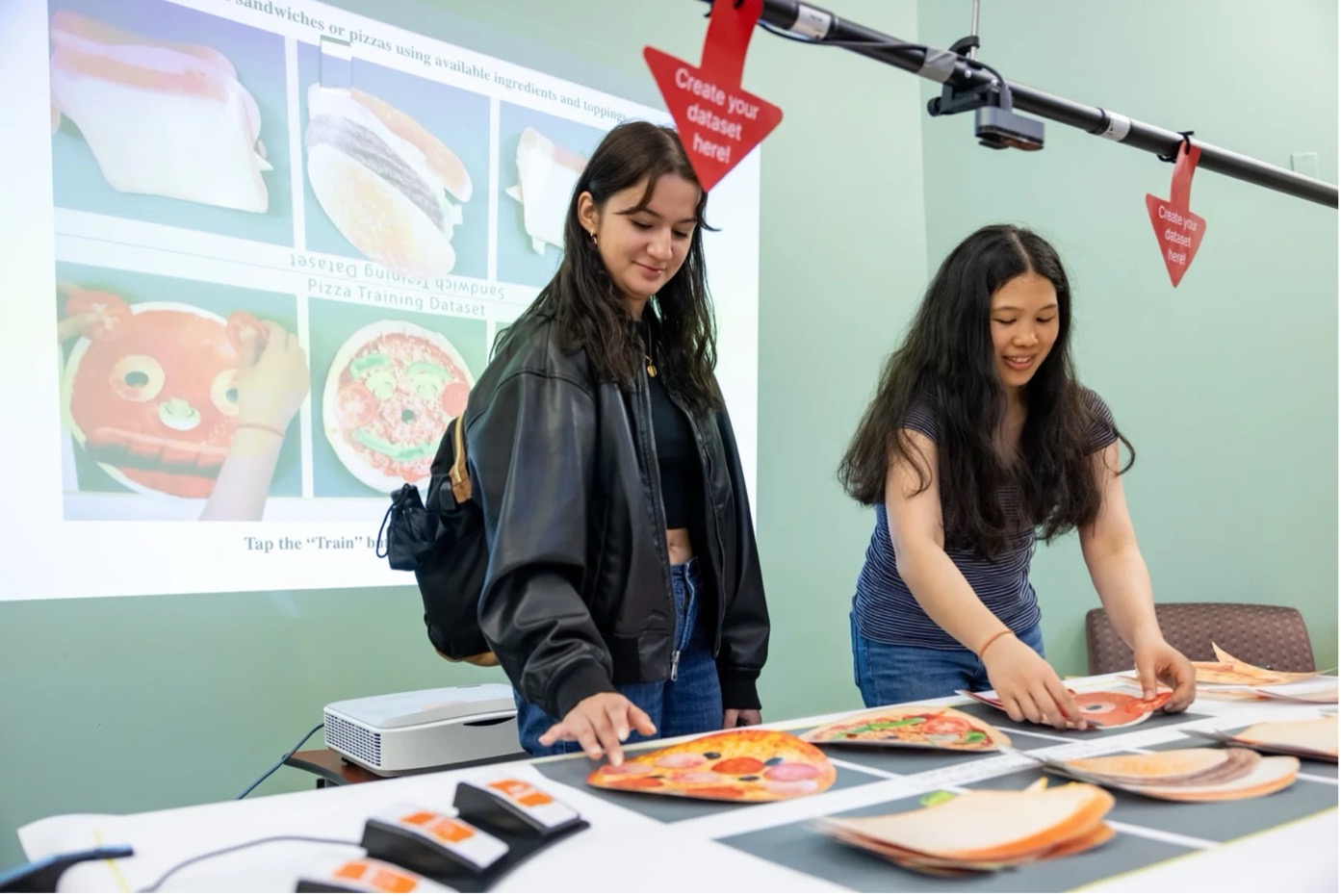
In this AISL Project Spotlight, Brian Magerko (Principal Investigator) shares about the project: Fostering AI Literacy through Embodiment and Creativity across Informal Learning Spaces (NSF #2214463).
“We look at what the role is of creativity and embodiment in the design of interactive installations for AI literacy in public spaces.”
AISL Project Resources
Resources from the AISL project: Fostering AI Literacy through Embodiment and Creativity across Informal Learning Spaces
- Fostering AI Literacy with Embodiment & Creativity: From Activity Boxes to Museum Exhibits
- The Social Construction of Generative AI Prompts
- Testing, Socializing, Exploring: Characterizing Middle Schoolers’ Approaches to and Conceptions of ChatGPT
- Fostering AI Literacy with LuminAI through Embodiment and Creativity in Informal Learning Spaces
- Is It AI or Is It Me? Understanding Users’ Prompt Journey with Text-to-Image Generative AI Tools
- DataBites: An embodied, co-creative museum exhibit to foster children’s understanding of supervised machine learning
- Knowledge Net: Fostering Children’s Understanding of Knowledge Representations Through Creative Making and Embodied Interaction in a Museum Exhibit
Resources from the AISL project: AI Behind Virtual Humans: Communicating the Capabilities and Impact of Artificial Intelligence to the Public through an Interactive Virtual Human Exhibit
- “It’s like I’m the AI”: Youth Sensemaking About AI through Metacognitive Embodiment
- Building Blocks for Understanding Artificial Intelligence: Designing Interactive AI Learning Experiences for Young Children and their Families in a Museum Setting
- Detect-Interpret-Respond: A Framework to Ground the Design of Student Inquiry into AI Systems
- Toward a Virtual Human Exhibit for Public AI Education
- K-12 Education in the Age of AI: A Call to Action for K-12 AI Literacy
Additional Resources
- National AI Literacy Day Resources
- 5 Essential Strategies for Responsible AI Integration in PreK-16 Education – Digital Promise
- The AI Literacy Imperative: New Briefs to Guide AI Literacy Implementation Across Learning Environments – Digital Promise
- AI Literacy: A Framework to Understand, Evaluate, and Use Emerging Technology – Digital Promise
- AI Literacy Framework for Primary and Secondary Education
References
1Ruiz, P., Liberman, B., Karim, S., Dallas, D., Zachariah, I., Peters Hinton, V., Chillmon, C., & Gonzales, L. (2025). Implementing AI literacy across learning environments: A series of briefs. Digital Promise. https://doi.org/10.51388/20.500.12265/268