December 15th, 2025
Brian Magerko (Principal Investigator) shares about the project: Fostering AI Literacy through Embodiment and Creativity across Informal Learning Spaces (NSF #2214463).
What is your project’s big idea and what inspired you to start this project?
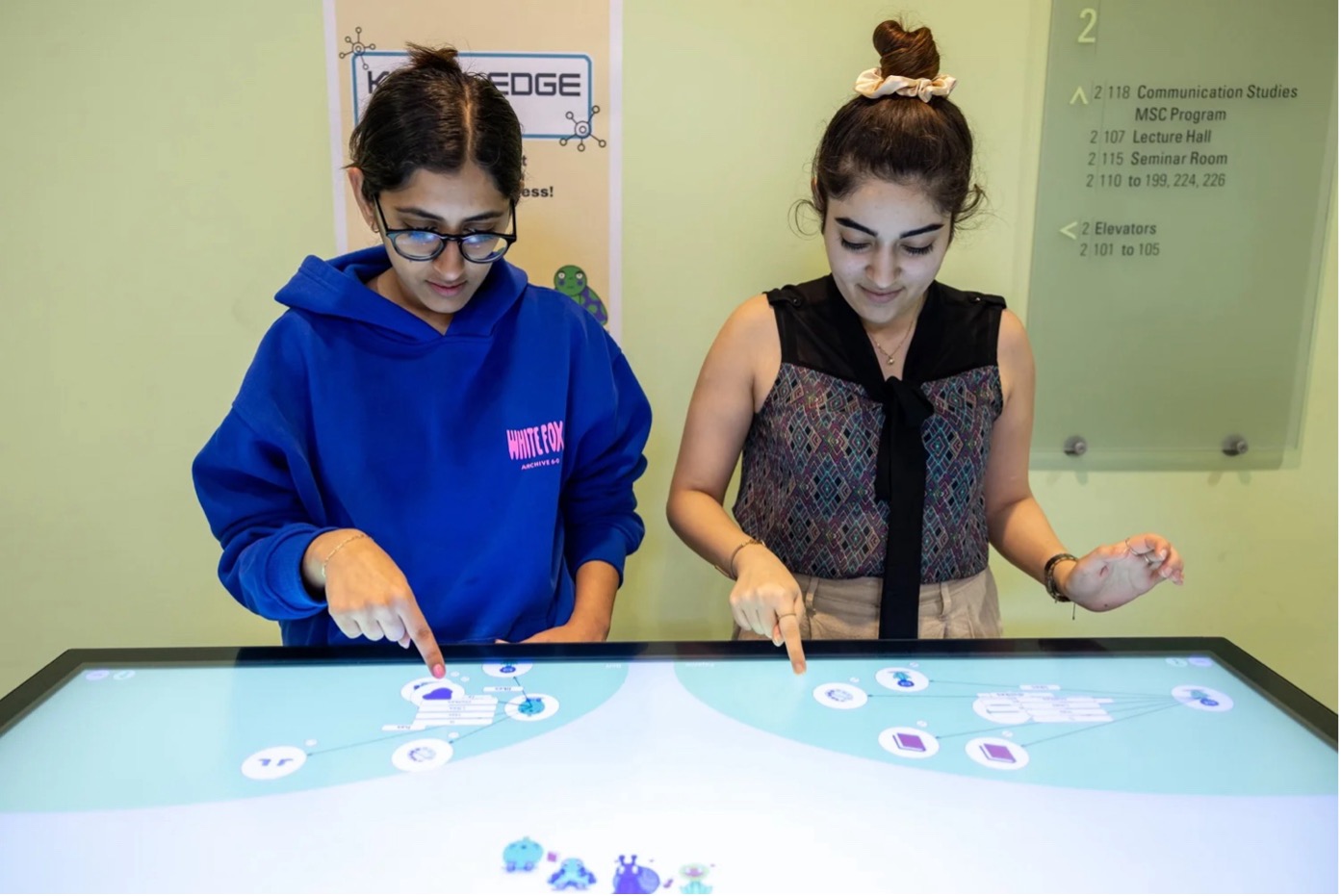
We look at what the role is of creativity and embodiment in the design of interactive installations for AI literacy in public spaces. It was inspired by the history of my lab’s work in creating embodied, co-creative interactive AI experiences combined with our work in broadening participation in computing through EarSketch, an online learning platform with over 1.8 million learners worldwide that engages primarily high schoolers in how to learn about programming through the manipulation of musical beats, samples, and effects with JavaScript or Python code.
How did you conduct outreach with the communities you worked with? How did you build trust with the community members that you worked with?
We have a long-standing relationship with our current partners, the Griffin Museum of Science and Industry in Chicago, the Children’s Museum of Pittsburgh, and the Museum of Design in Atlanta, but have reached out as part of our work to establish new relationships with other local partners, like the Mimms Museum of Technology and Art in Roswell, GA.
What recommendations do you have for those who want to do similar work and/or collaborate with similar audiences?
I would encourage a focus on multiple disciplines in your studies and look for how those disciplines can overlap and inform your work in interactive installations and/or AI literacy. Whether it is programming, quantitative research, set design for theater, learning science, and/or other disciplines—these are very multi-faceted problems that require the interweaving of related but distinct skillsets and methodologies.
What outcomes did your project find?
We’re still in the middle of determining that, but some clear findings are:
- Learners can often bring hybrid models of AI to the table, which means employing both “mechanized” and “human-like” metaphors for an AI.
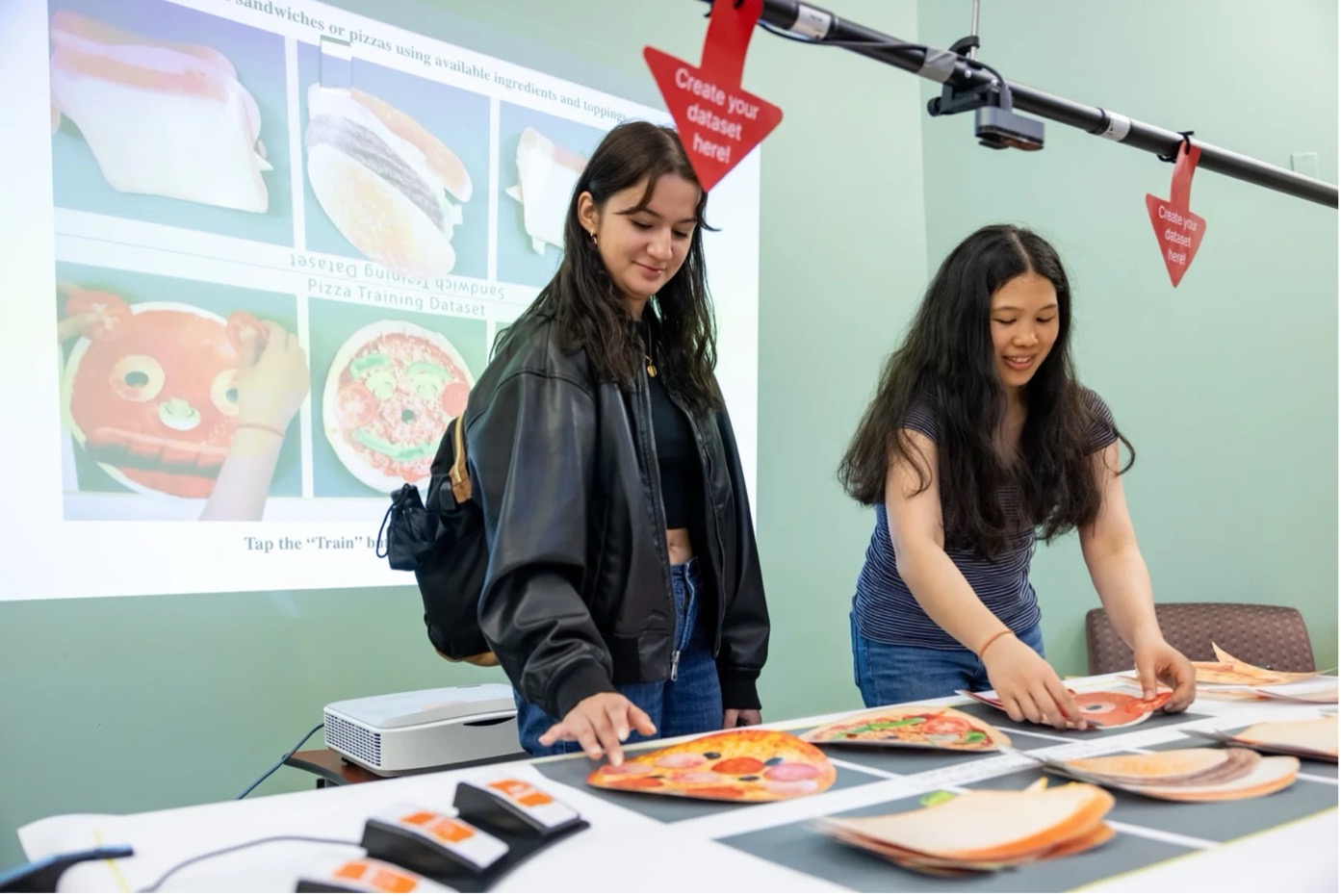
- Data is more understandable as a concept if it is a reconfigurable physical / tangible object (like pizza toppings on a pizza).

What is a challenge you encountered in your project? How did you overcome it?
Data analysis is a far bigger task than we had budgeted personnel for. Rather than trying to rebalance our research efforts, we have collaborated with Georgia Tech graduate and undergraduate researchers through special problems courses. This has given graduate students access to cutting edge research projects in AI literacy and informal learning while helping us do the deep dive in our data that we’re hoping for.