July 1st, 2026
Patty Loew (Co-Principal Investigator) and Deborah Raksany (Principal Investigator) share about the project: Ice Worlds: A Giant Screen Film and Outreach Project (NSF #2116070).
What is your project’s big idea and what inspired you to start this project?
Patty: The role I (Patty Loew) played in Ice Worlds was to mentor tribal youth on the Bad River Reservation in the production of short videos that explored environmental issues on Tribal lands and how tribal members were responding.
Deborah: The Ice Worlds media project is designed to engage millions of public viewers with polar science through media experiences and informal science programs. Centered on a large format film, the project embraces the concept of “science storytelling” as a means to help audiences recognize that people are part of the natural world and that what happens at the poles matters everywhere. This effort is also designed to build capacity for young learners (including Native youth) and informal science practitioners, who will create media and programs about environmental issues in regions across the US.
How did you conduct outreach with the communities you worked with? How did you build trust with the community members that you worked with?
Patty: Building upon nearly 20 years of conducting Tribal Youth Media TYM workshops on reservations in northern Wisconsin, my team met with elders on the Bad River Reservation in Spring 2022 who identified environmental topics they wanted their children to explore. These included manoomin (wild rice), solarization, and the effects of shifting weather patternson black ash trees used in basketmaking. The elders also identified GLIFWC (Great Lakes Indian Fish and Wildlife Commission) scientists and community members who had knowledge of these topics and were willing to be interviewed by the youth producers. We incorporated cultural protocols into our project (talking circles, smudging, gifts of asema, etc.) and held a community luncheon during which the finished videos were shown. We also had outside evaluators conduct an assessment of the project in which our youth producers, family members, community members, tribal leaders, and elders participated (evaluation link below).
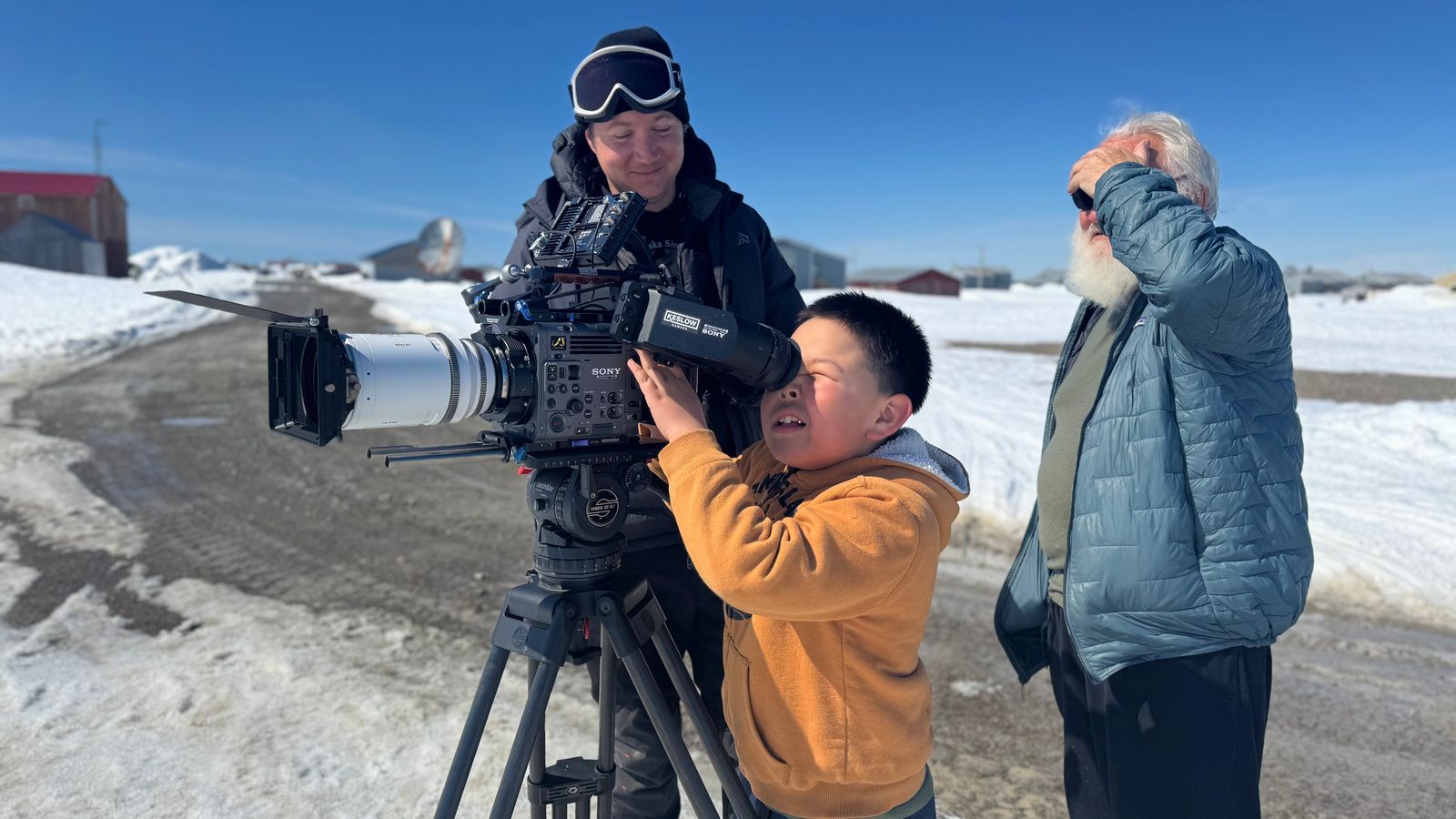
Deborah: This project leveraged Co-PI Dr. Patty Loew’s model for the Tribal Youth Media across all its components, which include youth-produced documentaries and a large format film. The TYM model involves deep work to build relationships with community members and to understand the stories they want to tell before beginning the actual production work. We also relied on Loew’s extensive network of contacts to establish partnerships. In Alaska, we were introduced to collaborators by project partners with SEARCH (the Study of Environmental Arctic Change, NSF Award # ), who have worked with experts on Saint Lawrence Island on another NSF-funded initiative to synthesize knowledge about the Arctic environment. We also had support from filmmaker Len Kamerling, who created “participatory verite” documentaries on Saint Lawrence Island in the 70s and 80s. These films are revered by our Yupik collaborators today for their authenticity and have facilitated continuing interest in this kind of storytelling. We could not have accomplished any of this work without a foundation of trust that partners helped establish for us.
A major part of this project’s filmmaking model is essentially formative evaluation, but with the communities we worked with on this project, in the lower 48 and in the Bering Sea, our team spent many months with advisors from our partner communities to learn what knowledge they wanted to share, who should share it, and how it should be shared. It required much more time and relationship building than we would spend on an ordinary project. It also meant investing in the communities we worked with—hiring local people to help with everything from workshop facilitation, assistance with production, cinematography and drone operation, and even cooking for our crew and providing coffee and snacks for our advisory meetings. Sometimes this meant complicating our production logistics so that we could give the opportunity to do paid work to five different snowmobile operators with sleds, instead of choosing a single, reliable person for a shoot. This was challenging, but very rewarding work.
Can you share a story about your participants’ learnings/experience around Storytelling?
Patty: The same summer we held our TYM workshop (2022), Mary Mazzio, the director of the award-winning documentary Bad River, was filming on the reservation. She was interested in using some of the interviews previous TYM participants had filmed and offered to provide drone footage of ricing on the Bad River Reservation in return. Mazzio’s interest in including the stories Bad River youth had produced over the years for her nationally distributed documentary emphasized the significance of storytelling and the role Native people play in adding their voice to environmental conversations. Our young producers learned how important collaboration is. They communicated to me that they felt a greater responsibility to produce good work. I know from Facebook posts last year that they were proud to see TYM credited in the Bad River film when they watched it at the AMC Theater in Ashland, WI and on Peacock, where it continues to be streamed.
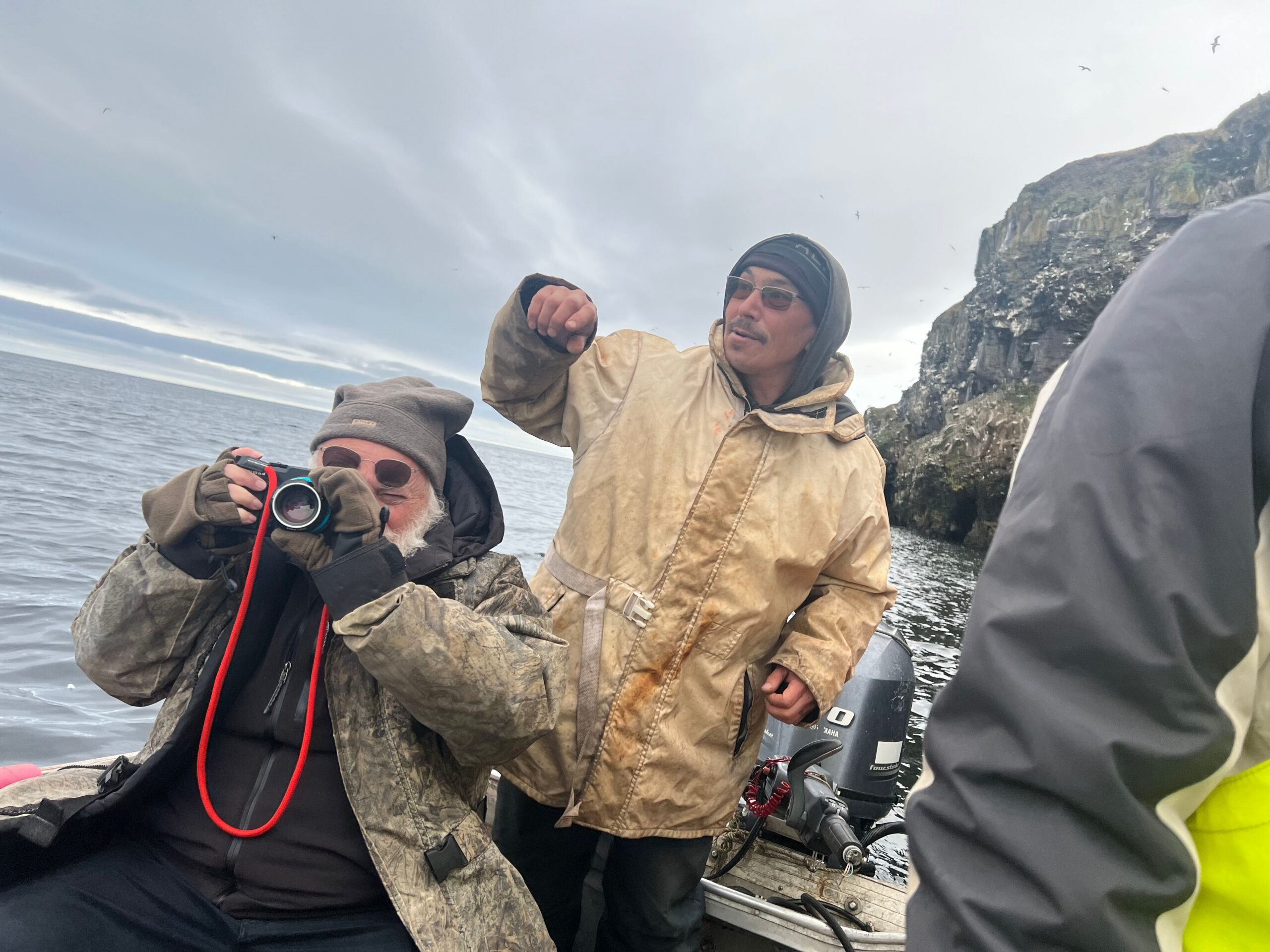
Deborah: For the collaborators we worked with on Saint Lawrence Island, oral traditions and storytelling are not just stories—they are essential strategies to preserve knowledge and share important information about environmental conditions. Effectively, when our collaborators share stories about their day-to-day activities, they are also sharing data about a very dynamic ecosystem that they interact with constantly. Our advisors in Savoonga told us how experienced hunters used to spend time drinking coffee together at the Village grocery store, and that their conversations were in fact rich with observations about ice conditions, wildlife migration, behavior and health, and the interactions allowed for synthesis of their shared environmental knowledge. Our advisors in Gambell suggested telling a story about the origins of the boat they have—a clever hunter re-engineered the frame of a traditional walrus skin boat by covering it with a resilient kevlar material, as large, female walruses have moved further from the island and are harder to hunt. This “storytelling” is about more than science communication—it helps our collaborators to reflect on how STEM knowledge and pursuits are integral to their way of life. By sharing their stories, they are contributing to a richer scientific understanding of the Arctic. Our hope is that they will continue to do this kind of work beyond the life of our project.
What recommendations do you have for those who want to do similar work and/or collaborate with similar audiences?
Patty: It is absolutely imperative that projects with tribal communities be co-created. Native people should be consulted and invited to help frame any project and be involved from inception to completion.
Deborah: Part of the reason our project was able to connect with our partners on Saint Lawrence Island is because our film’s directors, Steve McNicholas and Luke Cresswell (the creators of the stage show STOMP) are performers and musicians at heart. This resonated with people on Saint Lawrence Island, where drumming and singing are essential traditions. It’s helpful to have authentic intersections of interest beyond your project work to help build trust.
What outcomes did your project find?
Patty: EvaluAct, the independent evaluation company that evaluated the Tribal Youth Media Ice World workshop, concluded: “The results of this evaluation indicate that this approach to student filmmaking does serve as an effective mechanism for collective identity work and community engagement with Native youth at Bad River. The results of this evaluation also underscore the potential for this model to be a resilience-building opportunity for Tribal youth. The daily observation notes from the workshop show a clear progression of positively reinforced behaviors, and the actualization of those behaviors by student participants.” Specifically, EvaluAct made 15 observations in its summary conclusion, including:
- The workshop instills a sense of environmental stewardship in youth.
- Students build authentic and long-lasting connections with their community.
- Final student productions centered on local truth-telling.
- Students embraced learning new skills.
- Students better understand their relationship to the natural world.
As one community stakeholder, who was interviewed by EvaluAct researchers put it, “They’re in a cohort group that is celebrating that blend of what I always called the feather and the pen–that TK traditional ecological knowledge and the science side of things. So that’s a great environment to be in.”
The complete evaluation report is linked to this document (below)
Deborah: The Ice World large format film has not been evaluated at this date, but the Tribal Youth Media project resulted in notable impacts. Evaluation found that documentary filmmaking in a cultural context can serve as an effective mechanism for community engagement with Native youth—particularly with respect to STEM identity—thereby serving as an integral part of positive development.
What is a challenge you encountered in your project? How did you overcome it?
Patty: 35% of Bad River families live below the poverty line. TYM participants sometimes arrived at the workshop hungry. Although the tribe provides free lunch in a summer feeding program, it does not provide breakfast, so we learned to have fruit and snacks on hand. When there are teenagers involved in any project, there is bound to be occasional drama. When this happened, our community liaison, who is also a respected cultural teacher, navigated them through the angst with talking circles and smudging ceremonies.
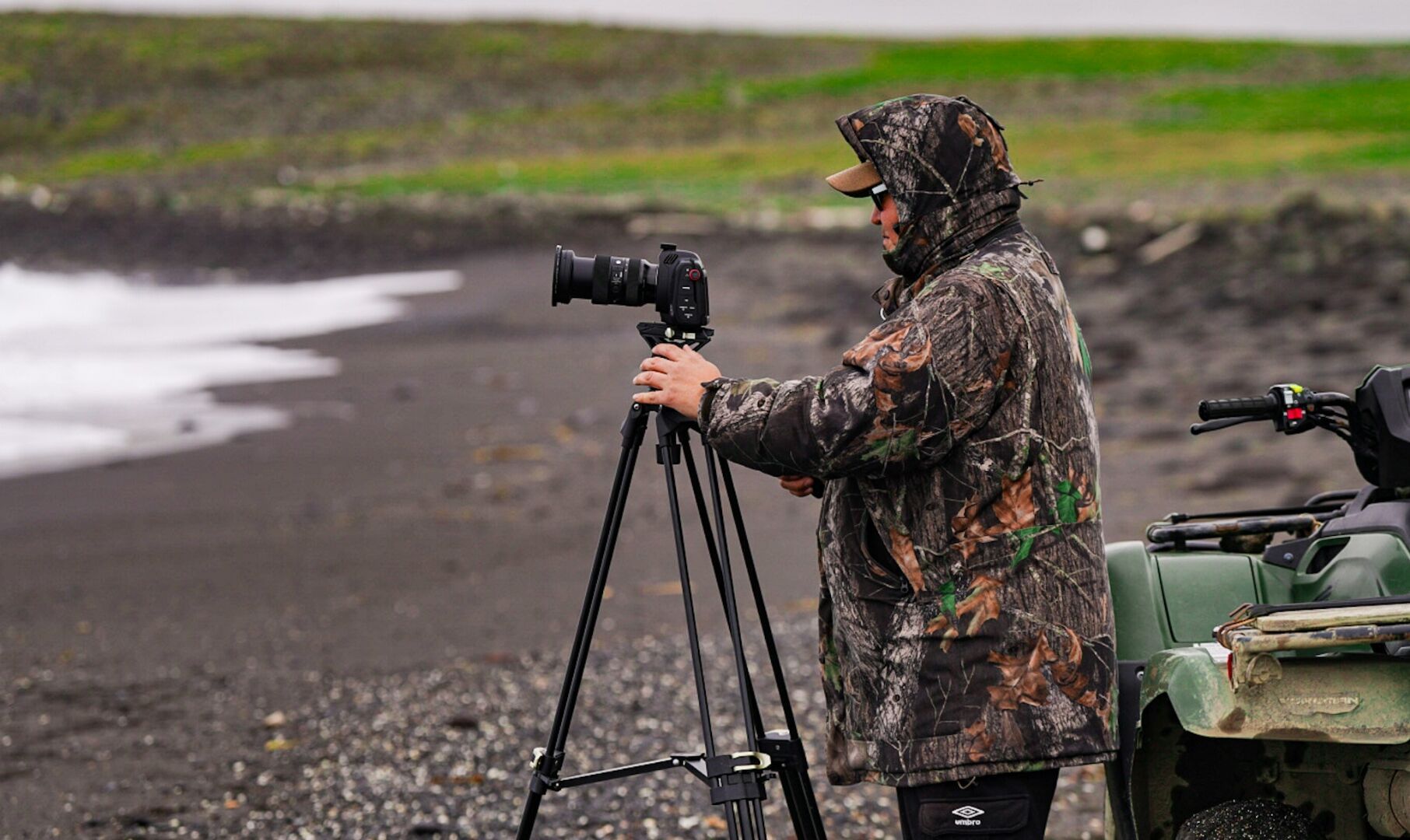
Deborah: Doing anything in the far north is much more challenging than it would be at home! Weather and logistics created major delays and significantly drove up costs. One solution that also satisfied our project’s goal of capacity building for our Arctic stakeholders was to provide ultra high resolution cameras, drones and training to local cinematographers on Saint Lawrence Island. This allowed us to capture material we never could have gathered with an outside crew, gave us access to local environments in all conditions, and gives an authentic lens on Bering Sea life.